
The Energy Leadership Index Assessment: What It Is and Why It Matters for Leaders
Sep 28, 2026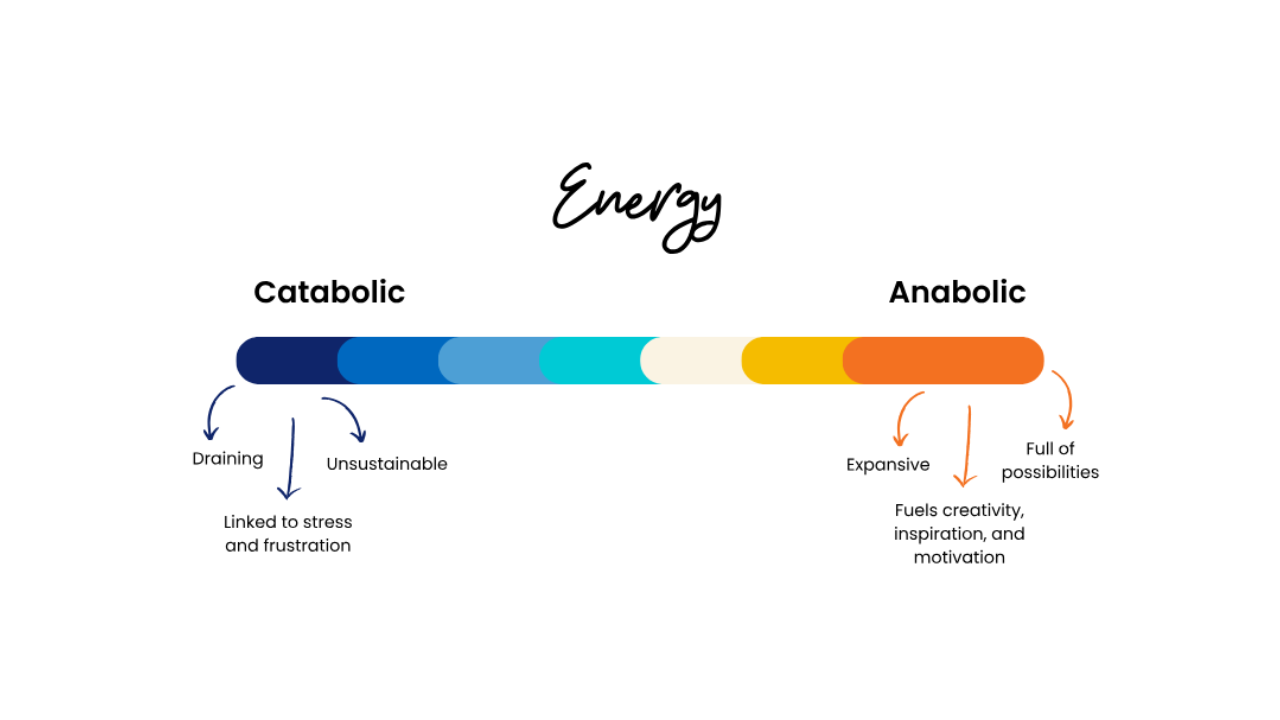
What if you could see how you show up under pressure?
Most of us have a fairly good idea of who we are when things are going well. We know how we communicate. We know how we lead. We know what we're good at.
But pressure has a way of revealing a different side of us.
When you're facing a difficult conversation, an impossible deadline, uncertainty, conflict, or a major decision, you may notice yourself becoming more reactive, controlling, defensive, withdrawn, impatient, or overwhelmed.
And sometimes, the person you become under pressure isn't the person you want to be.
This is one of the reasons I use the Energy Leadership Index (ELI) assessment in my coaching work. The ELI provides a framework for understanding the patterns and perspectives that influence how you experience and respond to the world, particularly when you're under pressure. It can give you a useful mirror. And sometimes, seeing the pattern is the first step toward changing it.
What is the Energy Leadership Index?
The Energy Leadership Index is an assessment developed by the Institute for Professional Excellence in Coaching (iPEC). It's designed to help you understand your habitual ways of thinking, feeling, and responding to the circumstances in your life.
The assessment looks at what iPEC describes as different levels of energy, ranging from more reactive patterns to more resourceful and intentional ways of responding.
The important distinction: these aren't personality types. You're not being assigned a permanent label. Instead, the framework helps you recognize how you're showing up right now, and what patterns tend to emerge in different circumstances.
That distinction matters, because you don't have to change who you are. You can learn to change how you respond.
Why this matters for leadership
Leadership isn't just about what you know. It's also about how you show up.
Two leaders can face exactly the same difficult situation and respond completely differently. One might immediately become defensive. Another might become controlling. Another might avoid the situation altogether. And another might pause, assess what's happening, and choose a response deliberately.
The external circumstances are the same. The internal experience and response are different.
This is where self-awareness becomes valuable. If you don't recognize your own patterns, it's easy to assume, "This situation is making me react this way." But the more useful question is often: "What's happening inside me that's influencing how I'm responding to this situation?"
That shift creates an opportunity for choice.
Your reactions can become patterns
Think about a stressful situation at work. Someone challenges your decision during a meeting. You feel yourself becoming defensive. Maybe you interrupt, maybe you over-explain, maybe you shut down, maybe you leave replaying the conversation in your head for the rest of the day.
The next time something similar happens, the same pattern shows up. Eventually, it becomes automatic. You don't consciously decide, "Today I'm going to become defensive." It simply happens.
This is true for many of the patterns that shape leadership:
- How you respond to criticism
- How you handle uncertainty
- How you respond to conflict
- How you communicate under pressure
- How you make decisions
- How you set boundaries
- How you delegate
- How you respond when things don't go according to plan
The ELI can help bring some of these patterns into awareness. And awareness creates the possibility of choice.
The goal isn't to eliminate "negative" emotions
This is an important distinction. The goal isn't to become calm and positive all the time. That's neither realistic nor desirable. Stress, frustration, anger, fear, disappointment, and uncertainty are normal human experiences.
The question isn't "How do I never experience these emotions?" It's "What do I do when I experience them?"
A leader who never experiences frustration isn't necessarily more effective than one who does. The difference is often what happens after the frustration appears. Can you recognize it? Can you create enough space to respond intentionally? Can you communicate without making the emotion someone else's problem? Can you make a decision without letting a temporary emotional state completely determine it?
That's the kind of self-awareness I care about developing through coaching.
What can the ELI help you understand?
The assessment can offer insight into patterns such as:
- How you respond to pressure: What happens to your thinking and behavior when demands increase?
- Your habitual perspectives: What assumptions or interpretations tend to shape how you experience situations?
- Your reactive patterns: Where might you become more defensive, controlling, withdrawn, or judgmental than you intend?
- Your leadership presence: How might your internal state influence the people around you?
- Your opportunities for growth: Where might developing greater awareness and intentionality create a meaningful shift?
The value isn't simply in receiving a report. The real value comes from exploring what the results mean for you, which is where a live ELI Assessment & Debrief makes the difference between data and insight.
Why take the ELI as part of coaching?
An assessment can give us information. Coaching helps you do something with that information.
When I use the ELI with a client, we're not simply looking at a score and saying, "Here's your personality." We're exploring questions like:
- Does this reflect how you experience yourself?
- Where do you recognize these patterns?
- When do they show up most strongly?
- What situations tend to trigger them?
- What impact might they have on your leadership?
- What would you like to change?
- What would becoming more intentional look like in your real life?
That's where the assessment becomes useful. It becomes a starting point for a deeper conversation.
The ELI isn't about becoming someone else
This may be the most important part. Leadership development isn't about turning you into a different person.
You don't need to become less ambitious. You don't need to become endlessly calm. You don't need to stop caring. And you certainly don't need to become some idealized version of a leader.
The goal is greater choice: to notice what's happening, understand your patterns, create space between stimulus and response, and choose how you want to show up.
Because the ability to regulate yourself under pressure influences almost everything else: your decisions, communication, relationships, resilience, and sustainable performance. That's why I see self-regulation as such an important leadership capability.
Is the ELI right for you?
The assessment can be particularly useful if you're:
- An executive or people leader
- An emerging leader
- A high-performing professional
- Navigating a major career transition
- Experiencing persistent workplace stress
- Working on your leadership presence
- Struggling with boundaries or overcommitment
- Trying to understand recurring patterns in your work or relationships
- Interested in developing greater self-awareness
You don't have to be struggling to benefit from it. Sometimes the best time to understand your patterns is before they become a problem.
Your patterns aren't your destiny
An assessment can show you where you are. It doesn't determine where you have to stay.
We all develop patterns for a reason, and many of them probably helped us get where we are. But something that helped you succeed in one chapter of your life may not be what you need in the next.
Leadership growth isn't necessarily about adding more. Sometimes it's about becoming more aware of what you're already doing, and building the ability to choose differently. That's where sustainable performance begins.
Curious what your leadership patterns look like?
As an iPEC Certified Professional Coach and Energy Leadership Index Master Practitioner, I use the ELI as one of the tools in my coaching work with leaders and high-performing professionals.
If you'd like to explore what the assessment could reveal about how you show up under pressure, I'd love to walk you through it.
Book Your ELI Assessment & Debrief →
