
What Does a Leadership Coach Do? And How to Choose One
Nov 10, 2026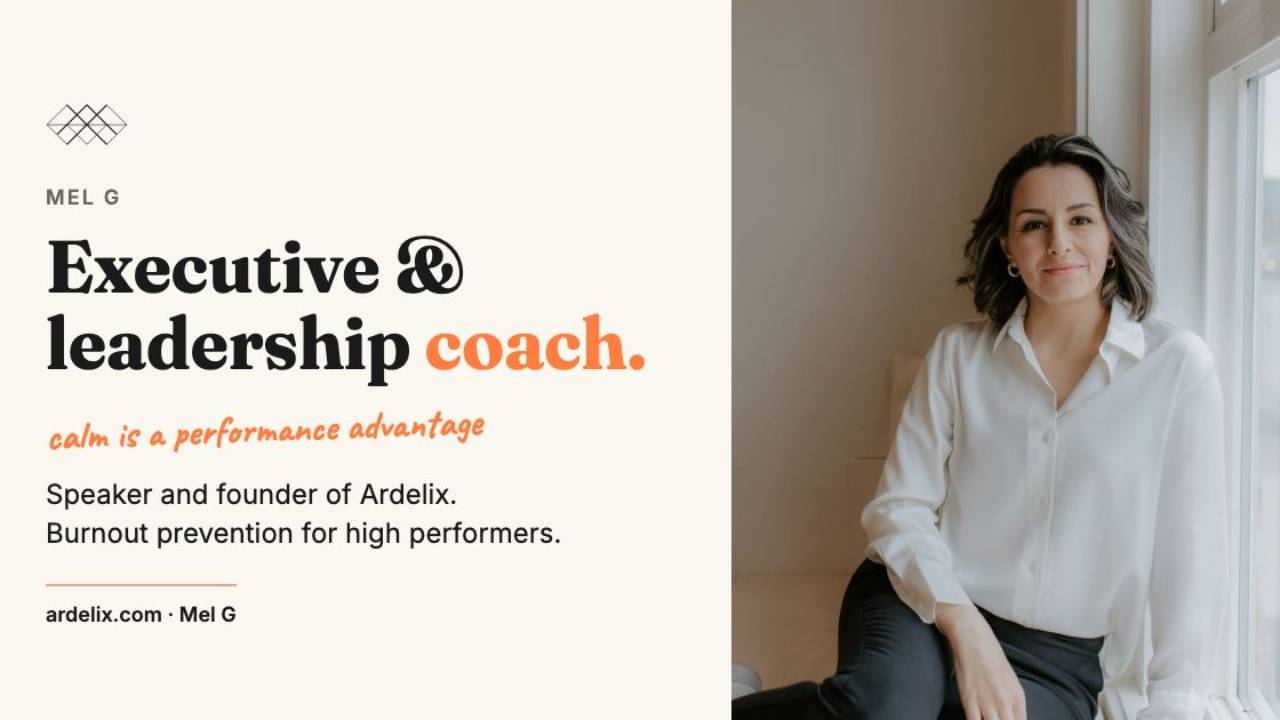
A leadership coach helps you lead better by helping you think more clearly about your own situation: the decision you keep putting off, the team that depends on you too much, the pace you can't keep up. A good coach doesn't hand you a playbook. They ask the questions that help you see your patterns, choose what to do differently, and follow through.
Key takeaways
- An executive coach does the same work as a leadership coach, usually with more senior leaders. The terms overlap.
- Coaching is different from therapy, mentoring and consulting. A coach doesn't diagnose, treat or simply give advice.
- Research on coaching is encouraging but more modest than the marketing. The most rigorous studies find real effects, often small to medium in size.
- Coaching isn't regulated, so anyone can use the title. Check credentials, relevant experience, and how you feel after the first conversation.
- Good coaching works well online, so you aren't limited to coaches in your city.
What does a leadership coach actually do?
Most engagements follow a similar shape:
- A first conversation. You talk about what's going on, what you want to change, and whether you'd work well together. It should feel useful in itself, not like a sales pitch.
- Setting goals. Together you decide what success looks like. For example, "delegate the weekly reporting and stop reviewing every slide", or "go into hard conversations without rehearsing them at 2 a.m."
- Regular sessions. You bring a real situation from your week. The coach helps you look at it from different angles and decide on a next step.
- Practice between sessions. This is where change actually happens. You try something new at work, notice what happens, and bring it back.
- Assessments, sometimes. Tools like the Energy Leadership™ Index (ELI) give you a shared language for how you tend to respond normally and under stress.
The topics vary. In my practice they often include:
- decision-making under pressure
- keeping calm under pressure
- boundaries and workload
- leading a team through change
- difficult conversations
- sustainable performance: how to keep performing without burning out
What's the difference between an executive coach and a leadership coach?
Not much in practice. "Executive coach" usually means someone who works with senior leaders: VPs, directors, founders, the C-suite. "Leadership coach" covers anyone who leads people or projects, at any level. What matters more is whether the coach understands the pressures of your role.
How is coaching different from therapy, mentoring or consulting?
People mix these up all the time, so here's how I explain it:
- Therapy is delivered by licensed clinicians. It can diagnose and treat mental health conditions and often works with the past. If you're dealing with depression, trauma or an anxiety disorder, therapy is the right place to start.
- Mentoring means learning from someone who has walked your path. A mentor tells you what they would do.
- Consulting brings in an expert to diagnose a problem and recommend a solution.
- Coaching assumes you're the expert on your own life and work. The coach's skill is in the questions, the reflection and the accountability.
I've worked on both sides of that last line. I spent more than a decade in technology consulting and leadership before I trained as a coach, and I burned out along the way, in 2021, while still delivering at work. That experience helps me understand what pressure feels like inside large organizations. But in a session, my job is to help you find your answer, not to give you mine.
Does executive coaching work?
The honest answer is yes, with caveats.
Several meta-analyses, which pool results across many studies, have found that workplace coaching improves outcomes. Jones, Woods and Guillaume (2016) found positive effects on learning and performance. When researchers look only at randomized controlled trials, the strictest kind of study, the effects tend to be smaller: Burt and Talati (2017) found them in the small to medium range.
A 2023 review of 20 controlled studies found that coaching changed behaviour more than attitudes or personal traits. It also found positive effects on self-efficacy, psychological capital and resilience. Interestingly, the number of sessions didn't change the results.
So treat any promise of a specific return, such as "7x ROI", with care. Coaching tends to help most with what you actually do differently at work. Whether it helps you depends a lot on having a clear goal and being willing to change.
Are executive coaches worth it?
It depends on what you need and what it costs you to stay where you are. Coaching tends to be worth it if:
- you're capable and motivated, but stuck on something hard work alone isn't fixing
- you're stepping into a bigger role, or leading through change
- you want to keep your ambition without paying for it with your health or relationships
- you're willing to try new behaviours, not just talk about them
It's probably not worth it if you want someone to tell you exactly what to do, if someone else is sending you and you don't want to be there, or if what you need is clinical support. If you're not sure whether you're simply tired or heading for burnout, start with the early signs high performers miss.
How much does executive coaching cost?
Fees vary widely, and there's little reliable current data. The Conference Board's 2008 fee survey found the most commonly stated fee for coaching top-tier executives in the US and Europe was more than $500 an hour. Rates for individuals and mid-level leaders are often lower, and many coaches price by package instead of by the hour.
A good coach will tell you plainly what's included and what it costs before you commit.
How do you choose the right leadership coach?
1. Check their training and credentials. Coaching isn't regulated, so a credential is one of the few outside checks you have. The International Coaching Federation (ICF) awards three levels: ACC, PCC and MCC. Even the first level, ACC, requires at least 60 hours of coach-specific education, 100 hours of coaching experience, mentor coaching, a performance evaluation and an exam. I hold the ICF ACC and iPEC's Certified Professional Coach (CPC). You can check any coach in ICF's public directory.
2. Look for relevant experience. A credential tells you someone can coach. It doesn't tell you they understand your world. Ask who they usually work with.
3. Ask how they work. How long is a typical engagement? Do they use assessments? What happens between sessions? What do they do if it isn't working?
4. Ask how confidentiality works. This matters most if your employer is paying. Agree up front what, if anything, gets shared with your manager or HR.
5. Pay attention to the first conversation. Did you leave with more clarity than you came in with? Did you feel listened to, or sold to?
Can leadership coaching be done online?
Yes, and for most busy leaders it's the easier option. It means you can choose a coach for fit rather than postcode. My sessions are online, so I can work with leaders across Canada, the US and elsewhere. I'm based in Vancouver, and in-person sessions are possible there.
Frequently asked questions
What does an executive coach do for you day to day?
Between sessions, not much that you'd see. In sessions, they give you a confidential place to think, challenge your assumptions, and hold you to what you said you'd do.
How long does leadership coaching take?
Many engagements run three to six months. Some people come for a shorter, focused piece of work, such as a single assessment and debrief.
Will my employer pay for coaching?
Sometimes. Many organizations have professional development budgets that can cover it. If you're unsure how to ask, that's a good topic for a first conversation.
Is coaching confidential?
It should be. ICF-credentialed coaches follow a code of ethics that includes confidentiality. If a company is paying, agree the boundaries with everyone at the start.
Do I need a coach in my city?
No. Fit and experience matter more than location, and online sessions work well.
Thinking about working with a coach?
If you're a leader who is doing well on paper but feels stretched thin, book a complimentary call. We'll talk about what's going on and whether coaching is the right next step. If it isn't, I'll tell you.
Sources
- International Coaching Federation: definition of coaching, ACC requirements and code of ethics (coachingfederation.org).
- Jones, R.J., Woods, S.A. & Guillaume, Y.R.F. (2016). The effectiveness of workplace coaching: a meta-analysis of learning and performance outcomes from coaching. Journal of Occupational and Organizational Psychology.
- Burt, D. & Talati, Z. (2017). Randomized-controlled-trial meta-analysis of executive coaching outcomes, as summarized in Nicolau et al. (2023).
- Nicolau, A., Candel, O.S., Constantin, T. & Kleingeld, A. (2023). The effects of executive coaching on behaviors, attitudes, and personal characteristics. Frontiers in Psychology, 14.
- The Conference Board (2008). Executive Coaching Fee Survey.
